Can Your Electrical Panel Handle a Hot Tub? What Ottawa Homeowners Need to Know
Adding a hot tub can be a great upgrade to your home, but it is also a significant electrical load.
Before the hot tub arrives, one of the most important questions to answer is whether your existing electrical panel can safely support it.
The answer depends on several factors, including the size of your electrical service, the capacity of your panel, the hot tub manufacturer’s requirements, and the other electrical loads already in your home.
Here is what Ottawa homeowners should know before installing a hot tub.
How Much Power Does a Hot Tub Use?
Many full-size hot tubs require a dedicated 240-volt circuit and a relatively high-amperage breaker.
The exact requirements depend on the model, so the manufacturer’s specifications should always be checked before electrical work begins.
Some smaller plug-and-play units use a standard receptacle, while larger permanent hot tubs may require substantially more electrical capacity.
That is why there is no one-size-fits-all answer.
Before installation, your electrician should review the hot tub specifications and evaluate your existing electrical system.
Does a Hot Tub Need Its Own Circuit?
In most permanent installations, yes.
A hot tub generally requires a dedicated electrical circuit rather than sharing power with lighting, receptacles, or other household equipment.
This helps ensure the hot tub receives the electrical capacity it requires and allows the circuit to be properly protected.
The installation may include:
A dedicated breaker
Appropriate wiring
Ground-fault protection
Disconnecting equipment
Outdoor-rated components where required
Proper bonding
Correct conductor sizing
The exact installation will depend on the equipment and applicable electrical requirements.
Can a 100 Amp Panel Handle a Hot Tub?
Sometimes.
A 100 amp electrical service does not automatically mean you cannot install a hot tub.
The real question is how much electrical capacity your home is already using.
For example, a home with:
Gas heating
Gas water heating
Gas cooking
Few major electrical loads
may have more available capacity than another home with the same 100 amp service but several large electric appliances.
A proper electrical load calculation can determine whether your existing service can accommodate the additional demand.
Does a Hot Tub Require 200 Amp Service?
Not necessarily.
Some homeowners assume that installing a hot tub automatically means upgrading to 200 amp service.
That is not always the case.
Your electrician should first evaluate:
Existing service size
Electrical panel capacity
Current household loads
Hot tub electrical requirements
Other future electrical projects
If sufficient capacity exists, your current service may be able to support the installation.
If not, a service upgrade or another appropriate solution may need to be considered.
What Is an Electrical Load Calculation?
An electrical load calculation helps determine whether your electrical service can support the equipment connected to it.
It considers major electrical loads throughout the property rather than simply counting the number of breakers in the panel.
These may include:
Heating
Air conditioning
Electric water heating
Electric range
Clothes dryer
EV charger
Hot tub
Heat pump
Other significant electrical equipment
This calculation provides a much better answer than simply looking at the main breaker and guessing.
Signs Your Panel May Not Be Ready for a Hot Tub
There are several clues that additional electrical work may be required.
1. Your Panel Is Already Full
If there is little or no room for additional breakers, installing the required hot tub circuit may require panel modifications or replacement.
However, physical breaker space and available electrical capacity are not the same thing.
Both need to be evaluated.
2. You Already Have Several Large Electrical Loads
A home with an EV charger, electric heat, electric water heater, electric range, and other major loads may have less available capacity for a hot tub.
This does not automatically mean the installation is impossible.
It simply makes a proper assessment more important.
3. Your Breakers Trip Frequently
If your home already experiences repeated breaker trips, flickering lights, or other electrical issues, those problems should be investigated before adding another large load.
Adding a hot tub will not solve an existing electrical problem.
4. Your Electrical Panel Is Very Old
An older panel may still function correctly, but age, condition, available circuit space, and overall capacity should all be considered before installing new high-demand equipment.
If the panel is already due for replacement, it may make sense to coordinate that work with the hot tub installation.
5. You Are Planning Other Major Electrical Upgrades
The hot tub may not be the only project you have in mind.
You may also be planning:
An EV charger
Heat pump
Basement suite
Electric range
Home addition
Workshop equipment
If so, it is worth planning the electrical system around your future needs rather than solving each project separately.
Where Should the Hot Tub Disconnect Be Installed?
Hot tubs require properly located disconnecting and safety equipment.
The exact location must comply with applicable requirements and the manufacturer’s installation instructions.
This is not something that should be improvised based on convenience alone.
Your electrician will determine the appropriate placement during the installation planning process.
Why GFCI Protection Matters
Hot tubs combine electricity and water, so ground-fault protection is especially important.
Proper GFCI protection is designed to disconnect power when certain electrical leakage conditions are detected.
Do not bypass, modify, or repeatedly reset protective equipment if it keeps tripping.
Repeated GFCI trips may indicate a problem with the hot tub, electrical installation, or connected equipment that requires troubleshooting.
Does the Wiring Need to Be Underground?
That depends on the hot tub location and installation route.
For many backyard installations, electrical wiring may need to travel outdoors from the home to the hot tub area.
The correct wiring method depends on:
Distance
Property layout
Indoor and outdoor routing
Local conditions
Equipment requirements
Your electrician will select an appropriate wiring method for the specific installation.
How Far Can a Hot Tub Be From the Electrical Panel?
There is no universal maximum distance that applies to every installation.
A hot tub can often be installed some distance from the electrical panel, but longer wiring runs may affect:
Installation cost
Conductor sizing
Routing
Labour
Materials
This is worth considering before choosing the exact location of the hot tub.
Sometimes moving the hot tub a relatively short distance can make the electrical installation much simpler.
Should You Call an Electrician Before Buying the Hot Tub?
Yes, especially if you are unsure about your electrical capacity.
This can save you from buying a hot tub only to discover that the electrical installation requires more work than expected.
Before purchasing, provide the electrician with the manufacturer’s electrical specifications if available.
They can then evaluate:
Panel capacity
Service size
Breaker space
Wiring route
Disconnect location
Potential upgrade requirements
That gives you a clearer idea of the complete project cost.
Can You Install a Hot Tub Electrical Circuit Yourself?
Hot tub electrical work involves high-current circuits, outdoor conditions, water exposure, grounding, bonding, and protective devices.
It should be completed by appropriately qualified professionals and inspected where required.
This is not a good project for trial-and-error DIY electrical work.
Improper installation can create serious shock and fire hazards.
What Happens During a Hot Tub Electrical Installation?
A typical installation may involve several steps.
Your electrician will generally:
Review the hot tub manufacturer’s electrical requirements.
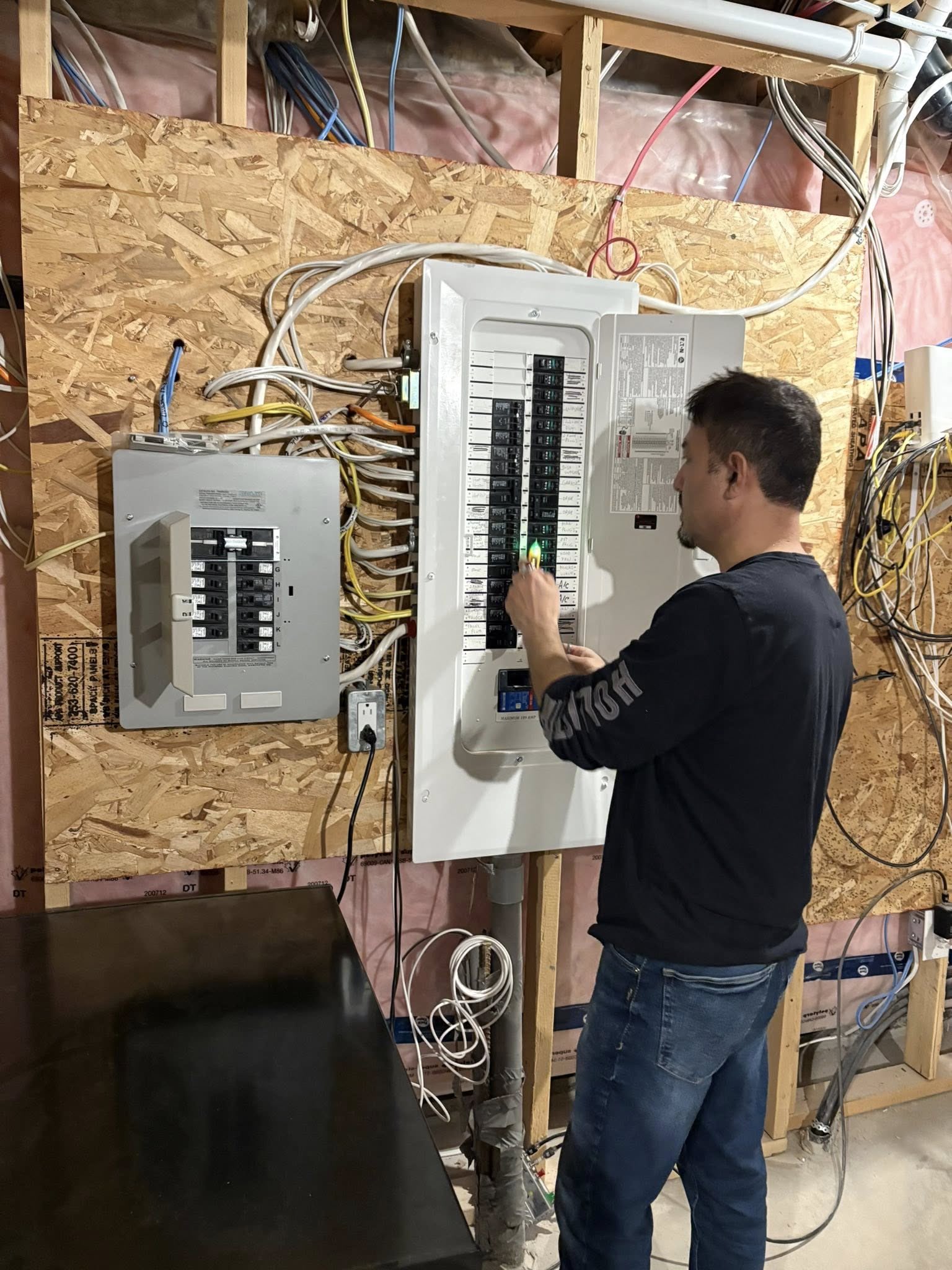
Inspect the existing panel and service.
Calculate available electrical capacity.
Determine an appropriate wiring route.
Install the required breaker and protective equipment.
Run wiring to the hot tub location.
Complete grounding and bonding as required.
Connect the equipment.
Test the installation.
Complete any required permitting and inspection process.
The exact work depends on the property and hot tub model.
What If My Panel Cannot Handle the Hot Tub?
If there is not enough electrical capacity, you still have options.
Depending on the situation, your electrician may recommend:
Electrical panel replacement
Service upgrade
Electrical load management
Adjusting other electrical loads
Another code-compliant solution
The best option depends on the home and the equipment being installed.
Do not assume a full service upgrade is required until the electrical system has been properly evaluated.
Should You Upgrade to 200 Amps at the Same Time?
If your home already has limited capacity and you are planning several future upgrades, moving to 200 amp service may make sense.
For example, you might eventually want:
Hot tub
EV charger
Heat pump
Electric range
Electric water heater
Additional living space
In that situation, planning ahead can be more efficient than making multiple major electrical changes over several years.
But if your existing service is adequate, there may be no reason to upgrade simply because you are installing a hot tub.
Can a Hot Tub Cause Breakers to Trip?
A properly installed and functioning hot tub circuit should not routinely trip its breaker or GFCI protection.
If tripping occurs repeatedly, possible causes may include:
Equipment faults
Moisture intrusion
Electrical leakage
Wiring problems
Component failure
Other installation issues
Repeatedly resetting the breaker without determining the cause is not recommended.
Have the issue professionally diagnosed.
What Electrical Problems Should You Watch for After Installation?
After the hot tub is installed, contact an electrician if you notice:
Frequent breaker trips
Repeated GFCI trips
Burning smells
Buzzing electrical equipment
Overheated components
Visible electrical damage
Intermittent power
Any signs of melting or scorching
Electrical equipment associated with a hot tub should not be producing unusual heat, smell, or sound.
How Much Does Hot Tub Electrical Installation Cost in Ottawa?
The cost varies significantly depending on the property.
Important factors include:
Distance from the panel
Hot tub electrical requirements
Panel capacity
Service size
Accessibility
Wiring route
Outdoor work
Required equipment
Whether a panel or service upgrade is needed
A straightforward installation close to the panel will generally be different from a long outdoor wiring run that also requires major electrical upgrades.
An on-site assessment is the best way to get an accurate estimate.
Plan the Electrical Work Before the Delivery Date
One of the easiest mistakes homeowners make is scheduling the hot tub delivery before confirming the electrical installation.
Ideally, speak with an electrician first.
That way you can coordinate:
Hot tub location
Electrical requirements
Wiring route
Installation timing
Any required upgrades
This can make the entire project smoother and reduce the chance of unexpected delays.
Frequently Asked Questions
Can a 100 amp electrical service run a hot tub?
Possibly. It depends on the other electrical loads in the home and the hot tub specifications. A load calculation is needed to determine available capacity.
Do all hot tubs need 200 amp service?
No. A hot tub does not automatically require 200 amp service.
Does a hot tub require a dedicated breaker?
Most permanently installed hot tubs require dedicated electrical equipment based on the manufacturer’s specifications and applicable electrical requirements.
Does a hot tub need GFCI protection?
Hot tubs require appropriate electrical protection due to the combination of electricity and water. The installation should be designed and completed according to applicable requirements.
Can I plug a hot tub into a normal outlet?
Some smaller plug-and-play models are designed for this. Larger hot tubs commonly require dedicated 240-volt electrical installations. Always follow the manufacturer’s requirements.
Should I install the hot tub before calling an electrician?
It is usually better to involve the electrician before finalizing the location or delivery so the electrical requirements can be evaluated.
Can I add an EV charger and hot tub to a 100 amp panel?
Possibly, but the combined electrical demand needs to be evaluated. Do not assume the existing service can or cannot support both without a proper load calculation.
Planning a Hot Tub Installation in Ottawa?
Before the hot tub arrives, make sure your electrical system is ready for it.
The most important step is determining whether your existing panel and electrical service have enough capacity and identifying the safest, most practical way to run power to the installation.
If you are planning a hot tub electrical installation in Ottawa, Kevin Electric can assess your panel, review the hot tub specifications, determine whether additional electrical capacity is needed, and complete the required electrical work for your project.
Planning the electrical side early can help make sure your new hot tub is ready to enjoy without unexpected electrical surprises.
