
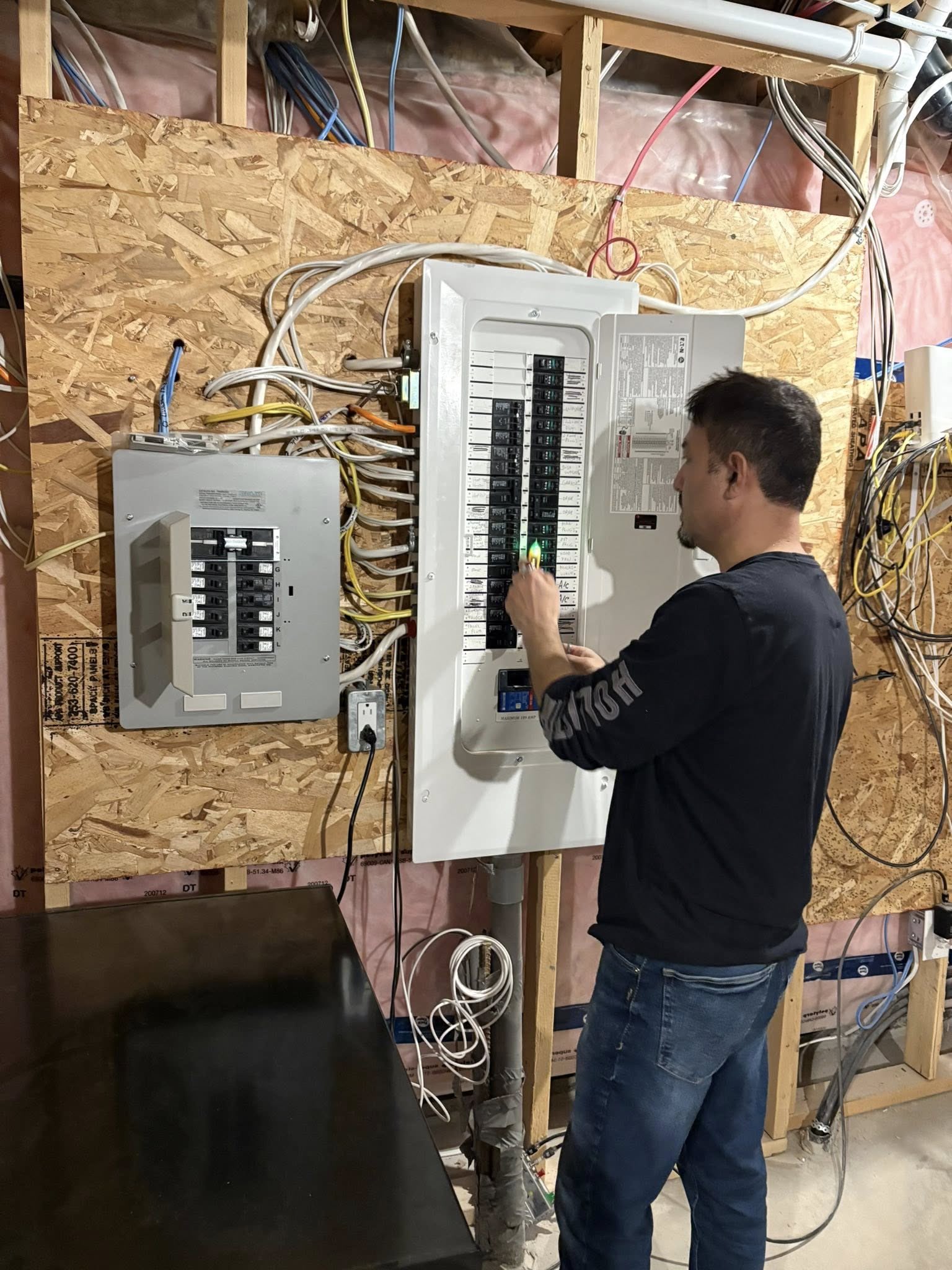
Renovating an Older Ottawa Home? When Should You Consider Replacing or Updating the Wiring?
Renovating an older Ottawa home can be exciting. Original architectural details can be preserved, outdated layouts can be improved, and kitchens, bathrooms, basements, and living areas can be adapted for the way families live today.
But renovation also provides something homeowners don't get very often: access to what is behind the walls.
Once drywall, plaster, ceilings, or flooring are opened, you may discover electrical wiring that has been in place for decades. You may also find modifications made by previous homeowners, circuits that no longer make sense for the current layout, or an electrical system that was designed long before today's appliances and technology became part of everyday life.
Older wiring doesn't automatically mean that the entire house needs to be rewired. The Electrical Safety Authority (ESA) specifically recommends evaluating older wiring based on its type and condition rather than assuming that age alone determines whether it must be replaced. EsaSafe
However, a major renovation can be an excellent opportunity to have the electrical system assessed and address appropriate upgrades before everything is closed up again.
Why Electrical Wiring Matters During an Older-Home Renovation
When planning a renovation, homeowners naturally focus on what they can see.
New cabinets, flooring, countertops, lighting, paint, and fixtures make the biggest visual difference.
Electrical wiring is different.
Most of it disappears behind the finished surfaces once construction is complete.
That makes the rough-in stage particularly important.
If existing wiring needs attention, dealing with it while walls and ceilings are already open can often be much more practical than discovering the issue after the renovation has been completed.
Our electrical services in Ottawa include wiring updates and assessments for older homes as well as renovation electrical work, panel upgrades, dedicated circuits, and modern lighting installations. Kevin Electric
Does Old Wiring Automatically Need to Be Replaced?
No.
The age of the house alone doesn't tell you whether all of its wiring needs replacement.
A professional assessment should consider factors such as:
Type of wiring
Physical condition
Previous modifications
Connections and terminations
Circuit configuration
Grounding
Electrical loads
Renovation plans
Current and future electrical requirements
Some older wiring may remain serviceable when it is in appropriate condition. Other wiring may need repairs, modifications, or replacement.
The goal shouldn't be to replace electrical components simply because they're old.
The goal is to understand what is installed and determine whether it remains suitable for the renovated home.
Start by Finding Out What Type of Wiring You Have
Older Ottawa houses may contain more than one generation of electrical wiring.
A home that has existed for 70, 80, or 100 years may have undergone several renovations.
One part of the house could contain older wiring while a renovated kitchen or addition has much newer wiring.
ESA has noted that older homes can contain multiple generations of wiring as electrical needs have changed over time. EsaSafe
Opening walls during a renovation can reveal some of this history.
If you're unsure what's installed, an electrical assessment can help establish a clearer picture before major renovation work proceeds.
What Is Knob-and-Tube Wiring?
Knob-and-tube is an older wiring method found in some older Ontario homes.
According to ESA, it was used in homes from the early 1900s through the 1940s and is no longer used for new installations. EsaSafe
If you're renovating an older Ottawa property from this period, knob-and-tube wiring is something that may need to be investigated.
However, finding it doesn't automatically mean every section must immediately be removed solely because of its age.
ESA states that existing knob-and-tube wiring can remain when properly maintained, while recommending that homeowners have a Licensed Electrical Contractor assess it for deterioration or damage. EsaSafe
When Should Knob-and-Tube Wiring Be Replaced?
Condition matters.
ESA guidance identifies concerns such as deterioration, mechanical damage, poor connections, overheating, and alterations that result in overloading as reasons existing knob-and-tube wiring may need replacement or correction. EsaSafe
A renovation can reveal conditions that weren't previously visible.
If walls are already open and older wiring is exposed, it makes sense to have it evaluated before new drywall covers it again.
Insurance Can Also Affect the Decision
Electrical safety isn't the only consideration with older wiring.
Insurance requirements may also influence renovation plans.
ESA notes that many insurers may refuse to provide or renew coverage on homes with knob-and-tube wiring, while some may require replacement before providing coverage. EsaSafe
Requirements vary by insurer.
If your home contains older wiring, it is worth discussing the situation directly with your insurance provider rather than assuming what they will or won't accept.
What About Aluminum Wiring?
Some Ottawa homes from another era may contain aluminum branch-circuit wiring.
ESA states that homes built between the mid-1960s and late 1970s may have aluminum wiring. EsaSafe
Aluminum wiring itself isn't automatically prohibited or unsafe.
ESA explains that aluminum wiring can be safe when connections and terminations are made properly, the wire isn't damaged, and approved devices are used appropriately. EsaSafe
However, it requires the correct techniques and compatible electrical components.
If aluminum wiring is discovered during your renovation, have it professionally assessed rather than assuming it either needs complete replacement or can simply be connected to new equipment without special consideration.
Insurance Requirements Can Apply to Aluminum Wiring Too
Some insurance companies have specific requirements for homes containing aluminum wiring.
ESA notes that some insurers may require an ESA inspection and may request repairs or replacement along with a Certificate of Acceptance. EsaSafe
Again, requirements differ.
Ask your insurance provider what documentation or electrical work they require for your specific property.
Renovations Can Reveal Previous DIY Electrical Work
One of the biggest unknowns in an older home isn't necessarily the original wiring.
It's everything that happened afterward.
Previous homeowners may have renovated rooms, finished basements, moved outlets, installed lighting, added appliances, or made other electrical changes.
Once walls are opened, you might discover:
Improper splices
Hidden junction boxes
Damaged cables
Unsupported wiring
Unusual circuit extensions
Poor connections
Questionable modifications
Our Ottawa basement-renovation guidance specifically recommends having questionable existing electrical work evaluated before it is hidden behind new finishes. Kevin Electric
Don't assume that something is correct simply because it has been behind a wall for years.
Your Renovation May Need More Electrical Capacity
Even when existing wiring is in reasonable condition, it may not support what you're planning to add.
Modern renovations often introduce much greater electrical demand.
An updated kitchen could include:
Electric range
Wall oven
Dishwasher
Microwave
Refrigerator
Range hood
Additional countertop appliances
More receptacles
New lighting
A finished basement could add:
Home office equipment
Entertainment systems
Electric fireplace
Additional refrigerator
Laundry equipment
Bathroom equipment
Exercise equipment
New lighting and receptacles
The existing electrical system needs to be considered alongside those new loads.
Older Circuits May Not Match Your New Layout
Imagine renovating a home where the original rooms were designed many decades ago.
The new layout may remove walls, combine rooms, relocate a kitchen, add a bathroom, or transform previously unused space.
The original circuits weren't designed around that new floor plan.
This can make renovation an appropriate time to rethink circuit distribution.
Instead of simply trying to make old outlet locations work with the new design, we can plan electrical circuits around how the renovated space will actually function.
New Appliances May Need Dedicated Circuits
Certain appliances and equipment have specific electrical requirements and may require dedicated circuits.
During renovation planning, create a complete list of the electrical equipment you intend to install.
Don't wait until the appliances arrive.
Depending on the project, this might include kitchen appliances, laundry equipment, heating and cooling equipment, workshop equipment, an electric fireplace, or other significant loads.
Knowing those requirements early allows the electrical work to be coordinated with the renovation.
Don't Forget Your Future Electrical Plans
You're already opening walls.
Think beyond what you're installing today.
Over the next several years, could you add:
An EV charger?
Heat pump?
Hot tub?
Induction range?
Electric water heater?
Basement suite?
Home addition?
Workshop?
Additional air conditioning?
Modern Ottawa homes are increasingly adding significant electrical loads, and future requirements should be considered when evaluating existing service capacity. Kevin Electric
Planning ahead doesn't necessarily mean installing everything now.
It means avoiding electrical decisions that make the next upgrade unnecessarily difficult.
Should You Upgrade Your Electrical Panel During the Renovation?
Possibly, but not automatically.
A major renovation is a sensible time to evaluate your electrical panel because you're already making substantial changes to the home's electrical system.
A panel or service upgrade may become relevant when:
The existing panel lacks capacity
Additional circuits are required
The panel is full
Equipment is in poor condition
Major new electrical loads are being added
The existing service doesn't meet planned demand
Many older Ottawa homes have 60-amp or 100-amp services, and larger modern loads can make a capacity assessment important. Kevin Electric
However, the right answer comes from evaluating the property—not assuming that every older house requires 200-amp service.
Renovating Is a Good Time for an Electrical Load Assessment
A load assessment helps determine whether your existing electrical service can support the renovated home.
An electrician may review the main service, panel, existing circuits, major appliances, heating and cooling equipment, proposed additions, and available breaker space. A formal load calculation may be appropriate depending on the project. Kevin Electric
Possible outcomes vary.
Your existing electrical system may be sufficient.
You may simply need additional circuits.
Panel modifications may be appropriate.
Or a service upgrade may ultimately be recommended.
Not every older Ottawa home will require the same solution.
Consider Wiring Before Installing New Pot Lights
Lighting is often a major part of a renovation.
Pot lights can dramatically change kitchens, living rooms, basements, hallways, and other areas.
But when the ceiling is already open, don't focus only on where the new fixtures will go.
Consider the condition and configuration of the existing lighting circuit as well.
A renovation provides an opportunity to plan new lighting, switches, dimmers, and circuit arrangements together instead of simply attaching new fixtures to whatever happens to be there.
Kitchen Renovations Deserve Careful Electrical Planning
A kitchen renovation is one of the clearest examples of why old wiring and new design need to be considered together.
Today's kitchens use significantly more electrical equipment than kitchens from many decades ago.
Before cabinets and countertops are installed, determine:
Appliance locations
Receptacle requirements
Lighting layout
Switch locations
Dedicated circuit requirements
Range or oven requirements
Island electrical needs
Other planned equipment
Changing these details after custom cabinets and finished walls are installed can be much more difficult.
Bathroom Renovations Need Electrical Planning Too
Bathrooms combine electrical equipment with water and moisture, making correct electrical planning particularly important.
Your renovation might include:
Vanity lighting
Receptacles
Exhaust equipment
Heated flooring
Additional ceiling lighting
Illuminated mirrors
Other electrical features
Have these components planned before the room is closed and finished.
Basement Renovations Can Reveal a Lot About an Older Home
Unfinished or partially finished basements can provide useful access to portions of an older home's electrical system.
During a basement renovation, we may be able to see existing cable routes, junctions, panel connections, and previous modifications that aren't visible elsewhere.
This can be an excellent opportunity to address appropriate electrical work before the basement ceiling and walls are finished.
Kevin Electric recommends evaluating older electrical components revealed during basement renovations rather than simply covering them with new finishes. Kevin Electric
Should You Rewire the Entire House During a Renovation?
Not necessarily.
A complete rewire is a substantial project and shouldn't be recommended simply because the home is old.
The decision depends on what the electrical assessment finds.
Some homes may need targeted updates in specific areas.
Others may have more extensive older wiring, deterioration, previous unsafe alterations, or renovation plans that make broader replacement appropriate.
A Licensed Electrical Contractor can assess the existing system and explain which components should be addressed.
Why Opening the Walls Changes the Equation
Accessibility can make a major difference.
Electrical work that requires access behind finished walls may involve additional disruption.
If you're already removing drywall or plaster for another renovation, electricians may have much easier access to wiring routes.
That doesn't mean you should replace wiring unnecessarily.
But it does mean that this is an especially good time to investigate questionable wiring and complete justified upgrades.
Once new insulation, drywall, cabinetry, flooring, and paint are installed, you'll probably prefer not to reopen them.
What Electrical Warning Signs Should You Mention?
Even if they seem unrelated to your renovation, tell your electrician about recurring electrical problems you've noticed.
These might include:
Frequently tripping breakers
Flickering lights
Warm outlets
Discoloured electrical components
Buzzing or crackling
Loose outlets
Intermittent power
Burning smells
Circuits that seem easily overloaded
These symptoms don't automatically tell you what is wrong.
They do provide valuable information that can guide the electrical assessment.
Do Electrical Renovations in Ontario Require ESA Notification?
Almost all electrical work in Ontario needs to be reported to the Electrical Safety Authority through a Notification of Work, sometimes commonly referred to as an electrical permit. ESA states that this should be filed before the electrical work begins. EsaSafe
A municipal building permit is not the same thing as an ESA electrical notification. EsaSafe
When a Licensed Electrical Contractor performs the work, the contractor handles the appropriate ESA notification process.
ESA classifies changes to original residential wiring—including certain repairs and replacements—as residential renovation electrical work. EsaSafe
Hire a Licensed Electrical Contractor
If you're paying someone to perform electrical work in your Ontario home, use a Licensed Electrical Contractor.
This becomes especially important during a major renovation where electrical work may involve new circuits, rewiring, panel modifications, lighting, receptacles, switches, and connections to major equipment.
The work behind your walls is going to remain there long after the renovation contractor leaves.
It deserves the same level of planning as everything you'll see on the finished surface.
Ask About Previous Electrical Work When Buying an Older Renovated Home
If you've recently purchased an older home that someone else renovated, you may not know what was changed electrically.
ESA recommends checking whether renovation work was properly notified and inspected and notes that its records can provide information about electrical work completed with an ESA notification. ESA records date back to 2000. EsaSafe
An electrical assessment can also focus specifically on the home's electrical system rather than relying solely on a general home inspection.
Plan the Electrical Work Before Construction Gets Too Far
One of the best things you can do is involve your electrician early.
Don't wait until:
The drywall is installed
Cabinets have arrived
The ceiling is finished
Appliances are delivered
Flooring is complete
Provide your electrician with the renovation plans and explain how every room will be used.
That allows electrical requirements to be coordinated with framing, plumbing, HVAC, cabinetry, and other parts of the project.
Renovating an Older Ottawa Home? Use the Opportunity Wisely
Older homes can have tremendous character, but their electrical systems were often designed for a very different era.
Renovating doesn't automatically mean rewiring everything.
It does give you an excellent opportunity to find out what's behind the walls.
If older wiring is damaged, deteriorated, poorly modified, unsuitable for the renovation, or unable to support your planned electrical needs, addressing it while construction is already underway can make sense.
We can assess the existing wiring, review your renovation plans, identify electrical concerns, and help determine which updates are appropriate for your Ottawa home.
